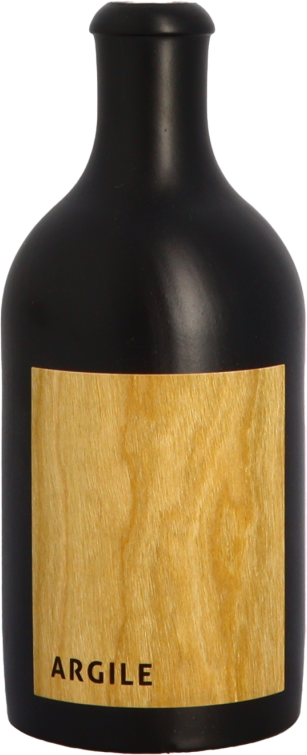
Château Lafitte Argile Monein, Jurançon, South West France
Petit Manseng12.5% abv£63 (50cl)France
Image: La Cave du Château
19/20A humdinger
Drink
2022 to 2031
Value
Drinking window
Today
2020202520302035
Drinking well, 2022 to 2031At its best, 2026 to 2030
A complex and distinctive nose, with ripe quince, bruised and yellow apple, yellow pear and ripe stone fruit taking centre stage, and plenty of citrus. Marzipan and almond add a rich, nutty dimension, with lemon peel, beeswax and subtle floral notes. There is a slightly oxidative quality to the bruised orchard fruit, bringing depth and savoury complexity, and a faint earthy, mineral character adds further intrigue.
Dry, concentrated and vibrant, with pronounced acidity in striking contrast to the rich aromatics. The nose follows through, with citrus taking a bigger role, on a subtle waxy texture with real depth. A clear saline streak emerges and, with the minerality, keeps the savoury oxidative character in check. The finish is long, with lingering quince, almond and citrus zest. For all its richness and unusual aromatics, the wine keeps remarkable freshness and tension.
An unconventional and compelling Petit Manseng, combining the grape’s naturally high acidity with a complex, slightly oxidative aromatic profile. What makes it so interesting is the contrast between the developed, savoury notes of bruised apple, quince and marzipan and the vibrant acidity that keeps it fresh. Fermented and aged in terracotta amphorae rather than oak, the grape’s character and texture take centre stage, and the wine feels both rustic and precise.
It drinks almost like a fino or a Jura sous voile, with the bruised apple and nuttiness of sherry. A likely reason is how it is made. The bruised-apple, nutty note of fino and Jura comes largely from acetaldehyde, which forms as wine meets oxygen; added sulphites normally bind it, and Argile has none: its total of 14 mg/L comes from the fermentation alone, a fraction of what most dry whites carry. A year on its lees adds texture and savoury depth, and because it is bottled unfined and unfiltered, some of that lees character stays in the wine, likely part of the waxy texture and the earthy edge. Quince, meanwhile, is a classic note of Petit Manseng itself. The pronounced acidity and concentration remain unmistakably Petit Manseng.
At £63 for 50cl, the equivalent of £94.50 a standard bottle, this is an expensive and unconventional white. Its appeal is less in straightforward value than in its individuality, its artisanal making and an expression of Petit Manseng unlike any other I have tasted.
Terroir and winemaking
Monein is the heart of Jurançon, in the foothills of the Pyrenees between Pau and Oloron-Sainte-Marie. Château Lafitte is a 14th-century manor house, reworked in the 16th century, when vines were already grown here. Its 5 ha of Petit and Gros Manseng sit on steep slopes of siliceous clay, limestone and puddingstone, the rounded-pebble conglomerate typical of Jurançon, and steep enough that most of the work is done by hand. Jurançon's best-known story is that the future Henri IV, born in Pau in 1553, had his lips rubbed with garlic and a drop of local wine at his baptism.
The estate belongs to the Arraou family; Antoine Arraou, a former Paris photographer, took over from his father Philippe in 2012 and converted it to biodynamics, certified by Demeter, alongside fruit trees and cereals. Argile, French for “clay”, is 100% Petit Manseng from vines averaging 25 years, among the first grapes picked, in early September, then pressed straight into terracotta amphorae, where it is fermented with native yeasts and left on its fine lees for a year. Nothing is added: it is unfined and unfiltered, with no added sulphites (just 14 mg/L in total, made by the fermentation itself) and under 1 g/L of sugar, bone dry from a grape best known in Jurançon for sweet wine. It is bottled in a 50cl stoneware bottle. The estate also makes oxidative Petit Manseng on purpose, including a sweet wine aged in a solera.
Structure
Low to high
The shape of the wine: each spoke runs from low at the centre to high at the edge.
Acidityhigh
Bodymed+
Alcoholmedium
Intensityhigh
Finishlong
Acidity, tannin, body, intensity and finish on five steps; alcohol on three, from the 12.5% abv. How these are judged
Fruit & floralquincebruised appleyellow appleyellow pearripe stone fruitcitruslemon peel
2020 was a warm, early year in Monein, the sixth warmest of the 32 seasons since 1994 at 17.0°C over April to October, 0.6°C above normal. Spring set the pace: April and May were each more than 2°C warmer than usual, so the vines started early. June was cool and July dry, with 35 mm of rain against a usual 84. August brought the heat, 1.1°C above average and peaking at 36.5°C on 7 August, with 13 days of 30°C or more over the summer against a typical eight or nine.
September stayed warm and fairly wet, with a wider gap than usual between day and night. For a wine picked in the first days of September, that early start and hot August mattered more than the cold, wet October that followed the harvest.
Average temperature
17.0°C
+0.6°C vs normal · 6th warmest of 32
Rainfall
803 mm
+12% vs normal
Hottest day
36.5°C
7 August · usual peak 34.6°C
Days above 30°C
13
in summer · usually 9
“Normal” is this spot's average for 1994 to 2023.
Month by month
Average temperature (line, left axis) and rainfall (bars, right axis) in 2020, with this spot's normal for each month.
Temperature 2020Normal temperatureRain 2020Normal rain
2020 against the years around it
Average temperature over each growing season. The dashed line is normal for this spot, 16.4°C: above it was a warmer year, below it a cooler one.
From the weather to the glass
Warm, early springApril +2.3°C, May +2.4°C vs average
An early start to the season, which fits the early-September pick. Picking that early is what keeps the acidity this high in a warm year.
Dry July, hot August35 mm of rain in July; 13 days ≥30°C, peak 36.5°C
Concentration and ripeness. Petit Manseng's thick skins and naturally high acidity hold up to heat, which is why the wine is rich yet still electric.
Wide September day-night range9.7°C, 0.7°C above average
Cool nights in the final weeks help hold acidity and aroma. A supporting reason for the freshness rather than the main one, which is the grape itself.
Source: ERA5-Land climate reanalysis (Copernicus Climate Change Service), for the 9 km grid cell at 43.3°N 0.6°W, which blends hilltops and valleys. Normals are the 1994 to 2023 average for the same cell.
How I score
Out of 20
Half points, out of 20, on Jancis Robinson's scale. The score rates quality only. Value is rated separately, so a brilliant £14 bottle and a brilliant £140 bottle can score the same. Full scoring method →